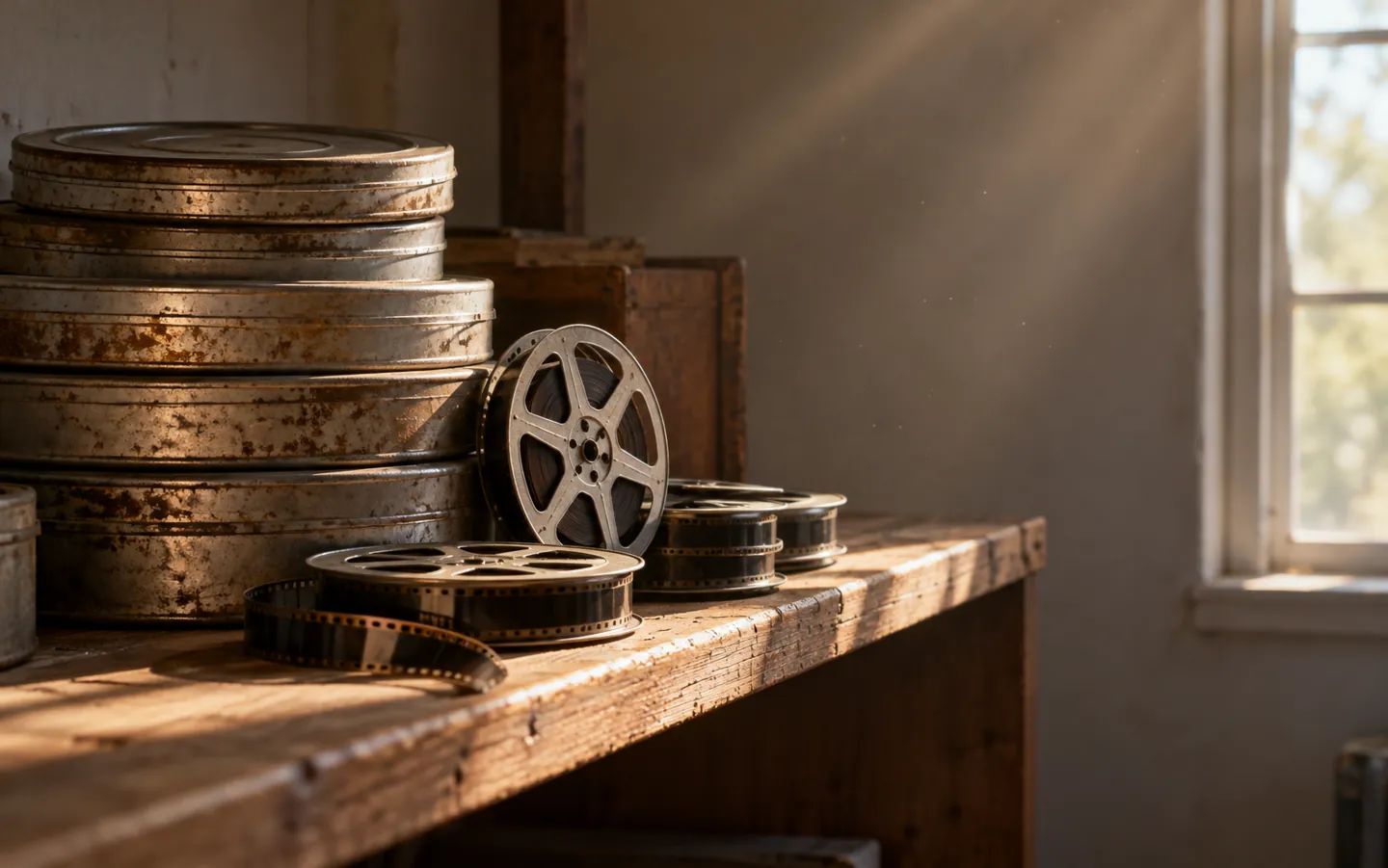
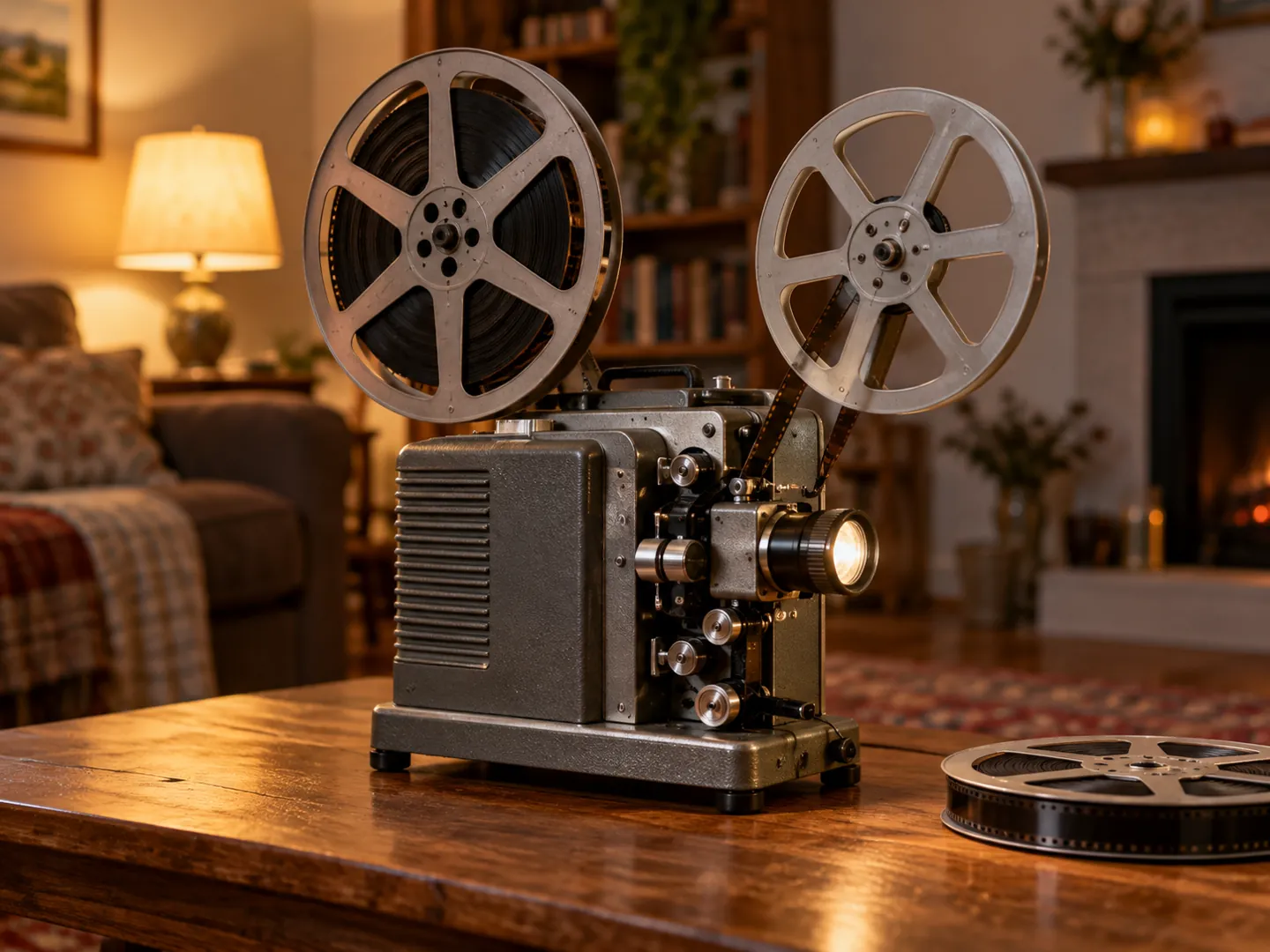
Somewhere in a loft there is a tin of family films.
Film is made of plastic that slowly breaks down, and colours fade. Film archives say good storage is the best preservation step you can take: cool, fairly dry, clean and stable. Warm lofts and damp cellars are the places to avoid.
AI-generated image, not a photograph of a real person or place.
Sniff the can
Keep it cool and dry
Watch a copy
Small steps, longer life
THE SHORT ANSWER
Film decays, but slowly if kept cool.
Heat and humidity speed up every kind of film decay. Cool, moderately dry storage slows them all.
THE SMELL
Vinegar means decay
Acetate 'safety' film that is breaking down gives off a pungent vinegar smell, followed by shrinking and buckling. Once it starts in earnest, it speeds up.
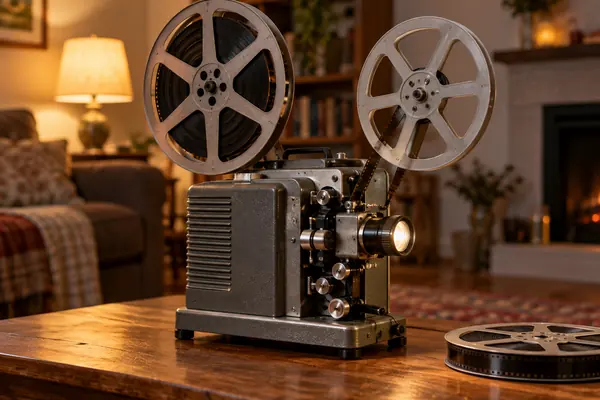
Use duplicates for viewing when possible, and fit the projector with a low-heat bulb. Let film from cool storage warm to room temperature for 24 hours first.
Pick what you notice to see what archivists say it means. The bar shows how urgently the film needs attention.
Based on the Library of Congress and the National Film Preservation Foundation. For valuable or badly decayed film, contact a film archive.
TWO NUMBERS WORTH KNOWING
Films fade, and many are lost.
One figure on how fast colour fades, one on how much early film has already gone.
≈ 40 years
Until significant fading at room conditions
The National Film Preservation Foundation says today's colour films will show significant fading in about 40 years at room conditions, and earlier ones faded in just a few years. Cold storage slows it.
COLOUR FADING · NFPF
20%
US features of the 1910s and 1920s surviving complete
The Library of Congress has documented that only 20% of US feature films from the 1910s and 1920s survive in complete form in American archives.
SURVIVAL · LIBRARY OF CONGRESS, VIA NFPF
Archivists call home movies, newsreels and other non-commercial films 'orphan films': they fall outside commercial preservation and often survive as one-of-a-kind copies.
FOUR CARE STEPS
Look after the original, enjoy a copy.
None of these needs special skills. They follow the care and storage guidance used by the Library of Congress.
Choose the right spot
Cool, relatively dry and stable. Avoid lofts, cellars and places at risk of leaks or temperature extremes.
Let decaying film breathe
Take smelly reels out of sealed containers, use ventilated ones and keep them apart from other films.
Handle by the edges
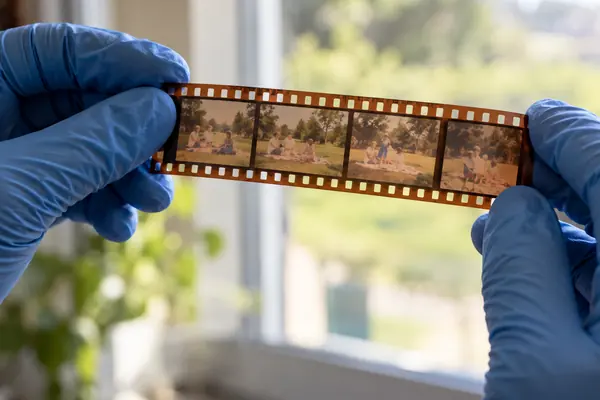
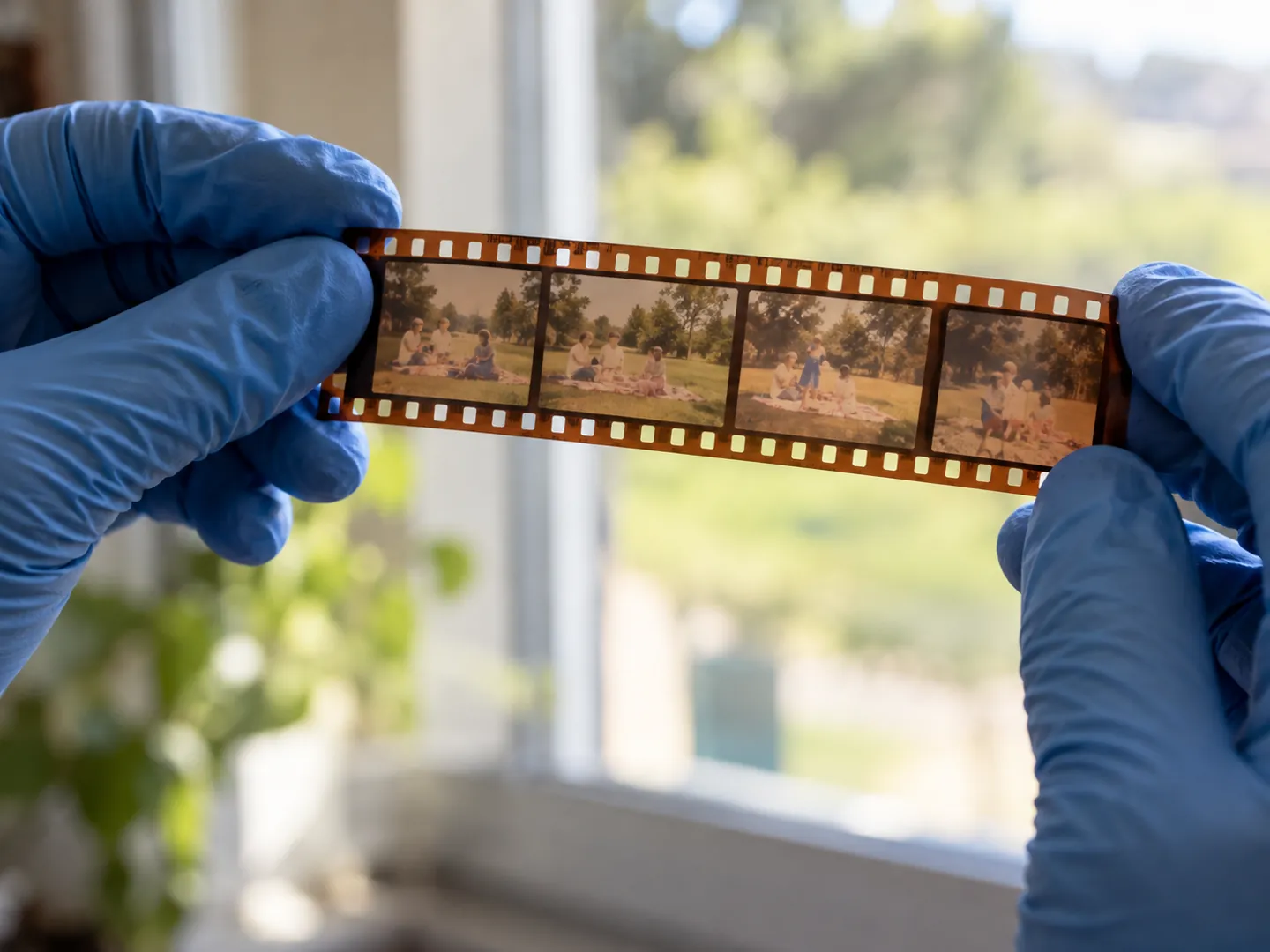
Wear clean nitrile gloves, keep food and drink away, and never touch the image side of the film.
Warm up before playing
Let film from cool storage reach room temperature over at least 24 hours, and watch a copy if you can.
AI-generated image, not a photograph of a real person or place.AI-generated image, not a photograph of a real person or place.
WHEN TO CALL AN ARCHIVE
Your films may be history too.
Film preservationists save film by copying it onto new, more stable stock, storing the originals cool and dry, and sharing copies. Home movies are among the films still at risk, because they fall outside commercial preservation programmes.
Some archives collect amateur films. The National Library of Scotland, for example, invites people with Scottish-related amateur films to contact its Moving Image Archive before sending anything in.
Questions
Questions people ask
Why does my old film smell of vinegar?
It is a sign of vinegar syndrome, the breakdown of acetate film base. The smell comes first, then shrinkage, brittleness and buckling. Warm, humid storage speeds it up.
How can I test film for vinegar syndrome?
Archivists use A-D Strips, treated paper strips placed in the can for a day or so that change colour with the degree of decay. They can detect it before you notice a smell.
Where is the best place to keep old cine film?
Somewhere cool, relatively dry (30 to 50% relative humidity), clean and stable. Avoid attics, basements, radiators and vents.
Is it safe to project my old home movies?
The Library of Congress advises using duplicates for viewing when possible, fitting a low-heat bulb, keeping the projector clean, and letting cool-stored film warm up for at least 24 hours.
Why are the colours in my old films purple?
Colour dyes fade over time. Cyan and yellow dyes often fade fastest, leaving many older films with a purplish cast. Cold storage is the way to slow fading.